Boycott israHell!

Boycott israHell!
Бойкот на израел и печелещите от окупацията! Boycott israHell and those who profit from occupation!
Showing posts with label Jerusalem. Show all posts

Sunday, July 20, 2014

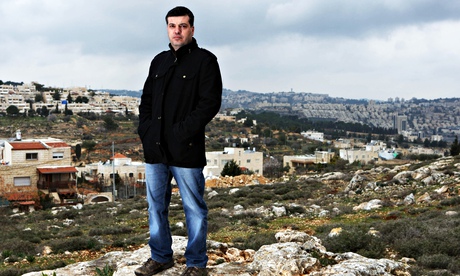
Sayed Kashua: why I have to leave #Israel

Sayed Kashua in Jerusalem. ‘I wanted to tell the Israelis a story, the Palestinian story. Surely when they read it they will understand.’ Photograph: Ziv Koren/Polaris /eyevine


Quite soon I am going away from here. In a few days we'll be leaving Jerusalem, leaving the country. Yesterday we bought little suitcases for the kids. No need to take a lot of clothes, we'll leave our winter clothes; in any event they won't be warm enough given the cold of southern Illinois, USA. We'll just need a few things until we get settled. Perhaps the kids should take some books, two or three in Arabic, and another few in Hebrew, so they don't forget the languages. But I'm already not sure what I want my kids to remember of this place, so beloved and so cursed.
The original plan was to leave in a month for a year's sabbatical. But last week I understood that I can't stay here any longer, and I asked the travel agent to get us out of here as fast as possible, "and please make them one-way tickets". In a few days we'll land in Chicago, and I don't even know where we'll be for the first month, but we'll figure it out.

Sunday, November 10, 2013

Israeli forces shoot 16 year old Palestinian protester Usaid Afana in the face near Jerusalem


JERUSALEM (Ma’an) — Israeli forces seriously injured a Palestinian teenager in clashes between Palestinian protesters and Israeli forces at Kabsa junction between al-Eizariya and Abu Dis on Friday.
Usaid Afana, 16, was hit by a stun grenade in the face when Israeli forces attempted to disperse a demonstration on Friday.
Afana lost consciousness, suffered internal bleeding and a skull fracture, local popular resistance committees spokesman Hani Halabiya said. He was subsequently taken to a nearby hospital for treatment.
Halabiya added that Israeli forces detained 3 Palestinians in the course of the clashes, but they were not identified.
Kabsa junction is a frequent site of Palestinian protest due to its location immediately adjacent to the Israeli separation wall, which cuts the area off from East Jerusalem.
Israeli forces frequently raid the area, which is near a campus of al-Quds University, to conduct arrests and home demolitions. These raids often lead to clashes.
Israel began building the separation wall in 2002, and the route has been the target of regular demonstrations by towns whose land is cut off by its path. Israel has confiscated large plots of Palestinian land in order to build the wall.
When the 435-mile barrier is complete, 85 percent of it will have been built inside the occupied West Bank.
In 2004 the International Court of Justice ruled that the separation wall was illegal and “tantamount to annexation.”
The internationally recognized Palestinian territories of which the West Bank and East Jerusalem form a part have been occupied by the Israeli military since 1967.

Wednesday, October 24, 2012

Sheikh Al-Azhar to Carter: the western support for Israel increases the conflict

Team Palestine


CAIRO, (PIC)-- Head of Al-Azhar Mosque and university Sheikh Ahmed Attayeb said that the US and European bias in favor of the Israeli regime augments the severity of tension and conflict in the Arab region and strains their relationships with Arabs.

He made his remarks during his meeting in his office on Tuesday with former US president Jimmy Carter and a galaxy of global leaders from the Elders group.

Sheikh Attayeb told Carter and his fellow leaders that the Palestinian cause is the core of the crisis in the region and there would be no lasting peace without a solution leading to the establishment of Palestinian state with Jerusalem as its capital.

For his part, Carter affirmed that the former leaders of the world in the Elders are working for peace in the region and highlight the injustice inflicted on the Palestinians in their diplomatic meetings and talks worldwide.

He noted that there are attempts underway by the Elders to reconcile between Hamas and Fatah factions and to reach a peace agreement between the Palestinians and the Israelis.

Friday, May 4, 2012

Campaign to boycott Adidas


Adidas falls in the test of integrity

Sports is a human effort, bringing together people on the principles of freedom, justice, equality and non-racism and slavery. 
For a long time, sport was used to face the associations and countries that practiced racial segregation, discrimination and all forms of ethnic cleansing, occupation and colonization, for example, many sport associations for several types of sports, especially the Federation of Sports English Football (Alrjbe) adopted the principle of boycott the Pretoria regime apartheid in South Africa, and the policy has had a great impact on the dismantling of the apartheid regime.
On March 16, the Zionist occupation organized a competition to run Marathon in the city of Jerusalem. Marathon The path was divided into track between East Jerusalem and West Jerusalem, in an attempt to prove that Jerusalem is the capital of their state.
This action was opposed to all international laws that states that Jerusalem is an occupied city. Many international companies, including Adidas, the manufacture of sports clothing and shoes, had applied to be the sponsor of this unfortunate event that is totally against the spirit of freedom, equality and justice for which sports competitions are held.
This irresponsible act of corporate sponsors to support Zionist entity's Marathon, must not go without punishing those companies that promote killing and occupation. Arab Sports Federation has announced the boycott to all companies that sponsoring the Marathon, including "Adidas" for their contribution in spreading hatred and racial discrimination and their support for the Israeli occupation in Palestine that's killing hundreds and thousands of Palestinians, and deportation of millions of their land in the greatest human tragedy after World War II.

Later, ministers of Sports and youth Arab countries announced the Arab boycott of Adidas from contributing and sponsoring all Arab sports activities.
And For the Holy Jerusalem, the Arab Sports Federation decided that the Arab Marathon will be held next year in countries Archive on the same day of the Israeli marathon in most Arab countries, entitled "Jerusalem is ours. Finally, we would like to extend our sincere thanks to the Arab Federation for Sport and ministers of Youth and Sports, and we call all sports fans and athletes to boycott all products of "Adidas" as a contribution from them in response to the illegal act made by Jerusalem Occupiers and also as a contribution in the fight against Israel occupation in the Arab-Islamic land of Palestine.

We also call all fans of sports teams being sponsored by Adidas to boycott this company for their support of the occupation of Palestine and Jerusalem. Finally, Adidas has to know that all Arabs and Muslims love Jerusalem and Palestine, and hate the Zionist occupation.

Translate from Arabic, Team Palestine

Friday, February 24, 2012

Injured protester 'dies in surgery'

RAMALLAH (Ma'an) -- Medics say a Palestinian protester died Friday during surgery after being shot during clashes with the Israeli army near Ramallah in the occupied West Bank.

Talat Ramia, 25, suffered a gunshot wound to the chest and five others were injured, medics at the Palestine Medical Complex said. Ramia died during emergency surgery, they said. 

Israeli forces were seen firing tear gas and both live and rubber bullets at the protesters gathering near the Qalandia checkpoint after hearing rumors of a raid on a holy site in Jerusalem. 

An Israeli military spokesman did not immediately return a call seeking comment.

Thursday, February 23, 2012

al-Quds today

ن يومي ..نريدها وعي بالخطر و شحذ للهمم و حتى يكون الدعاء اصدق ..

هذه اخبار الاقصى لهذا اليوم نقلا عن مركز اعلام القدس
__________________________________________

10:12- المعتقلين لهذا اليوم حتى اللحظة هم : رياض اغبارية من ام الفحم وتامر

شلاعطة من سخنين وإبراهيم خليل من البعينة نجيدات وحارس الاقصى سامر قويدر.

10:00- الشيخ كمال الخطيب يتمكن من دخول الاقصى وهو الان يعظ بالمرابطين ويشد من ازرهم

من الساعه 09:00 وحتى 10:00- هدوء في ساحات الأقصى مع انتشار مكثف للاشاعات

08:55- إقتحام مجموعة ثالثة من المستوطنين مكونة من 25 مستوطنا بينهم أطفال

08:30- شرطة الاحتلال تستخدم بوابتين لدخول وخروج المستوطنين إلى الأقصى، وهما باب المغاربة وباب السلسلة

08:25- مجموعة أخرى من المستوطنين تقتحم باحات الأٌقصى وهي مكونة من 9 نساء و8 رجال من باب السلسلة

08:20- شرطة الاحتلال تسمح بدخول من تقل اعمارهم عن 45 عاما من دخول الاقصى بعد احتجاز بطاقاتهم الشخصية

08:15-شرطة الاحتلال تخرج حارس المسجد الأقصى سامر أبو قويدر من ساحة الأقصى

08:10- دخول الدفعة الأولى من المتطرفين لباحات الأقصى وعددها 12 متطرفا بحماية شرطة الاحتلال

08:05- الاحتلال يغلق عدد من بوابات المسجد الأقصى بوجه المصلين

08:00- شرطة الاحتلال تخضع المصلين للتفتيش الدقيق اثناء دخولهم المسجد الأقصى


Очите ни гледат Кудс, сърцата ни са в Кудс, душите ни копнеят мъченичество в Акса! Цяла сутрин, до този момент групи евреи - екстремисти влизат в Акса и се разхождат спокойно в нея! Уличките на стария град видяха марша им - грозен, нахален, огласен с расистки антиарабски и антиислямски викове. Арабските жители на Кудс бяха принудени да останат затворени по домовете си, магазинчетата да спуснат капаци - за да премине необезпокоявана агресивната демонстрация. Братята в Акса посрещат нашествениците с Аллаху Акбар! На мюсюлманите, отправили се за обедната молитва в Акса, беше отказан достъп!!! ХасбунаАллах уа ниама-л-уакиил!

Палестинската държавна телевизия дори не говори за Акса, Махмуд Аббас и хабер си няма. Арабският свят е зает с братоубийства, кралят - пазител на харамейн аш-шарифейн съвсем е забравил, че има и трети харам шериф! Европа мълчи! Акса не е статуя на Буда, за да заслужи реакция. ХасбунаАллах уа ниама-л-уакиил!

Tuesday, February 21, 2012

Al-Aqsa Mosque, Jerusalem, Palestine


Al-Masjid El-Aqsa is an Arabic name which means the Farthest Mosque. To understand its name, and its importance, it must be remembered that the roots of Islam began in the Arabian Peninsula (Saudi Arabia today).


Ten years after the Prophet Mohammad (pbuh) received his first revelation, he made a miraculous night journey from Mecca to Jerusalem and to the Seven Heavens on a white flying horse called Al-Buraq El-Sharif. During his interval in Jerusalem, the Prophet stopped to pray at the rock (now covered by the golden Dome), and was given the commandment to pray five times a day.
Today, Muslims throughout the World use Mecca as the direction of prayers (Qibla). However, for 16½ months following the Prophet Mohammad's miraculous journey, Jerusalem was the Qibla.


Al-Aqsa Mosque and Dome of the Rock

During Prophet Mohammad's life (pbuh), he instructed Muslims to visit not only the mosque where they lived in Mecca, but also the 'Farthest mosque' from them which lay 2000 kilometers north, in Jerusalem. Hence the name Al-Masjid El-Aqsa, or Al-Aqsa Mosque.
Al-Aqsa Mosque is the second oldest mosque in Islam after the Ka'ba in Mecca, and is third in holiness and importance after the mosques in Mecca and Medina.
The rectangular Al-Aqsa Mosque is 144,000 square meters, 35 acres, or 1/6 of the entire area within the walls of the Old City of Jerusalem as it stands today. It is also called Al-Haram El-Sharif (the Nobel Sanctuary). The Dome of the Chain marks the exact central point of this Mosque.
Al-Aqsa Mosque holds up to 400,000 worshippers at one time, bearing in mind that the space required for each person is roughly 0.8m x 0.5m to enable the submissive kneeling in prayer. On Fridays at noon, during the fasting month of Ramadan, and particularly the 27th of Ramadan (Lailat El-Qadr), the area is filled to virtual capacity.
There are 11 gates to Al-Aqsa Mosque: 7 of which are open. Of the 4 closed gates, one is the Golden Gate.
Al-Aqsa Mosque MinaretIndications of any Muslim mosque the World over is the thin spiral minaret which always immediately adjoins the Mosque wall. Minarets are used to call Muslims to prayer five times a day, seven days a week throughout the year. At Al-Aqsa Mosque, there are four minarets: 3 square and 1 cylindrical from the Mamluk period.
There are no minarets on the Eastern side of Al-Aqsa Mosque because there were no inhabitants and thus no-one to call to prayer. After all, it was not till the late nineteenth century that Jerusalem began to expand outside the city walls.
Al-Aqsa is made up of 3 parts, narrow arcades run along one end, a huge atrium and a covered area at the south.
Running alongside the arcades are several family burial sites (maqamat). These persons contributed to the schools and charities in the vicinity of the Mosque run by the Supreme Muslim Council.
The atrium of Al-Aqsa Mosque is an oasis of peace and tranquillity inside a walled city of hustle and bustle. It has trees, lawns, fountains, the beautiful Shrine of the Dome of the Rock, small domed rooms and structures which are rooms for scholars, sheikhs and religious court offices, and a museum.
Before Muslims pray, they are required to go through a ritual ablution. There are manuablution areas, but the Cup is one of the oldest and most photographed fountains on the Mosque grounds.
In the center of the southern end of the atrium is the covered area of Al-Aqsa Mosque. The Mihrab (niche showing direction of prayer) of the Mosque is located here. Al-Aqsa building (recognizable by its lead dome), was originally built nearly 1300 years ago by Muslim Caliph Al-Walid the son of AbdulMalek bin Marwan in 709 AD.
Throughout its history, Al-Aqsa was subject to successive restoration work due to damages caused by earthquakes, etc. The building now has the central nave and 6 aisles (the original covered area had 14 aisles).
The covered area of Al-Aqsa Mosque is a very simple, but large and imposing, rectangular structure. It has an area of 3500 square meters, and holds up to 5000 Muslims at prayer at one time. The Qibla facing south towards Mecca and the Rock within the Dome of the Rock are on the same central line.
There are 7 large gates to enter the Mosque's covered area, as well as 1 single door on both the eastern and western sides. There are over 100 clear and colored glass windows, 14 Arches, 27 Italian Marble columns on the eastern side, and the equivalent number of stone piers on the western side.
The outer dome was covered with Lead in 1985 replacing the Aluminum dome of 1964 in order to restore it to its original cover.
The inner dome, decorated with stucco work, dates back to the 13th century.


Al-Aqsa Mosque Dome

In accordance with Muslim tradition, men and women are permitted to pray within the covered area but in different sections, 3 times a day. The remaining two daily prayers as well as Friday noon prayers, Al-Aqsa is for men only. The covered part of Al-Aqsa Mosque was converted to a Knight's Hostel in part, and Chapel in part during the Crusader period. Restoration of Islamic atmosphere was done by Salahuddin Al-Ayyoubi.
In 1969, after 2 years of Israeli occupation, a fanatic Jew set fire to the covered area for the first time in its history. Repairing the damage from the fire still continues. Among the numerous sad losses was the beautiful handmade pulpit from Aleppo. It was a gift from Salahuddin Al-Ayyoubi and stood near the Mihrab (niche) in Al-Aqsa Mosque. This Pulpit, considered one of the most beautiful in the World, was made of over 10,000 interlocking pieces of Cedar and other wood, Ivory and mother of pearl affixed without a drop of glue or a single nail. A remaining section of this Pulpit is among the various artifacts on display at the Islamic Museum, in the southern corner of the Noble Sanctuary.
The restoration of the subterranean Marwani Musallah (praying place) was completed in 1996. It is 4000 square meters, and was tiled in a brief 2 months entirely by volunteers. The Marwani Musallah is mistakenly believed by some to be the site of King Solomon's stables, however its construction is actually entirely 8th century Umayyad.
In the middle of the 19th century Al-Aqsa Mosque was opened for Non-Muslim visitors. For Non-Muslims, the Mosque is open during fixed times on weekday mornings and afternoons on payment of an entrance fees. The Mosque is closed to Non-Muslims on Fridays throughout the year and all Muslim holidays.
Although in the past, everyone entered Al-Aqsa Mosque without shoes, now Muslims and tourists alike are permitted to enter Al-Aqsa with shoes. Shoes however, have to be removed to enter the Dome of the Rock and Al-Aqsa's enclosed area as a sign of cleanliness and respect. Cameras likewise, are permitted in Al-Aqsa Mosque, but not inside any building. Visitors should ensure they are modestly dressed with arms and legs covered. Ladies should have a scarf to cover their hair. While on holy ground, intimate or personal contact must be avoided.


source: Atlas Tours. net

Wednesday, May 18, 2011

Jewish settlers storm Palestinian school in OJ, attack homes in Al-Khalil


[ 17/05/2011 - 06:56 PM ]


OCCUPIED JERUSALEM, (PIC)-- Jewish settlers, escorted by Israeli occupation forces, stormed a school for orphans in occupied Jerusalem on Tuesday and assaulted a number of students.
The Palestinian ministry of education said that the occupation forces arrested the headmaster and his deputy, adding that three of the students were injured in the settlers' attack.
It said in a statement that the students' lives were in danger after they were forced out of school and left easy prey for settlers' attacks.
Meanwhile, Jewish settlers threw a firebomb at a Palestinian home in Al-Khalil on Tuesday during an attack on a number of suburbs in the city.
Witnesses told the PIC that setters threw a firebomb at a home for El-Baradei family south of the city as other groups were seen throwing stones at Palestinian cars in downtown.
Palestine-info Center

Monday, May 16, 2011

EU Commissioner Georgieva calls for an end to evictions and house demolitions in East Jerusalem

16-05-2011


EU Commissioner Kristalina Georgieva yesterday called for an end to evictions and house demolitions in East Jerusalem on a visit to the area, during which she met Palestinian families who had suffered evictions. The meeting came during a four-day visit to the occupied Palestinian territory and Israel, together with UN Under Secretary General Valerie Amos.
 
The Commissioner for International Cooperation, Humanitarian Aid and Crisis Response met yesterday with Palestinian President Mahmoud Abbas and Prime Minister Salam Fayyad, and together they visited the West Bank’s area C, where the Commissioner and the UN Under Secretary-General met the victims of East Jerusalem evictions.
 
Commissioner Georgieva reiterated the EU’s continued humanitarian support to the most vulnerable among the Palestinians. Following her visit to Jahalin School in Area C and East Jerusalem’s neighbourhood of Sheik Jerrash, she said: “I am particularly moved by the plight of ordinary Palestinian families whom I met in the West Bank’s area C and in East Jerusalem. Notably women and children live under the constant threat of harassment, eviction and disruption of their lives. There is an issue of protection. Any action that leads to forced displacement must stop.”
 
She added: “This issue combined with serious restrictions on access and movement imposed by the occupying power means that most of the people are denied the possibility for economic and social development. They are denied the right to live a life in dignity.
 
A European Commission press release said Jahalin School epitomized the challenges faced by people in the West Bank and in particular in Area C: the risk of demolition of houses and infrastructure, subsequent displacement, shrinking land available, poor access to services, water shortage and communities being subject to settler violence.
Around 60,000 Palestinians (out of 225,000) in East Jerusalem face the risk of eviction from their homes.
 
The European Union is financing humanitarian projects which provide legal support to people threatened by evictions or cash to allow them to pay the rent in their new homes and basic household items, as well as psychosocial support.
 
Speaking last week ahead of her departure, Commissioner Georgieva had said: “While all eyes are set on the tremendous changes happening on the political scene with the Arab Spring and the inter-Palestinian reconciliation, we must not forget the humanitarian situation in the occupied Palestinian Territory… During our visit to the region, Valerie Amos and I will engage with the relevant stakeholders to ensure not only the continuous provision of relief, but also of humanitarian access and protection to civilians, in line with international humanitarian principles and law.” (ENPI Info Centre)

Friday, February 18, 2011

Gates of Jerusalem: A journey through 13 checkpoints


There are roughly 22 checkpoints in and around Jerusalem. They mostly run along the municipal boundaries of the city and in some places go deeper into the West Bank, along the route of the barrier. I went to visit and document 13 of them:


1. Walajeh Checkpoint. 9:48AM
2. Checkpoint 300 (Bethlehem/Rachel's Tomb). 10:32AM
3. Nu'man Checkpoint (Mazmoriya). 10:52AM
4. Sheikh Saad Checkpoint. 11:28AM
5. Sawahira Asharaqiya Checkpoint. 11:52AM
6. Abu Dis Checkpoint. 12:23PM
7. Abu Dis Checkpoint (sealed off,inactive). 12:41PM
8. Zeitim Checkpoint (Al-Tur). 12:56PM
9. A-Za'ayyem Checkpoint. 13:04PM
10. Shuafat Refugee Camp Checkpoint. 13:14PM
11. Ras Hamis Checkpoint. 13:27PM
12. Qalandiya Checkpoint. 13:41PM
13. Al Jib Checkpoint. 13:58

Friday, December 3, 2010

Al-Maqdese Concludes Comprehensive Report On Israel’s Violations In Jerusalem

by Saed Bannoura - IMEMC & Agencies

The al-Maqdese Society for Development concluded, recently, a comprehensive report on Israeli violations in occupied East Jerusalem, and revealed that since Israel occupied East Jerusalem in 1967, the Israeli authorities have demolished, and issued orders to demolish, 1,485 Palestinian homes in the city.
Demolishing a Palestinian Home In Jerusalem - File, Image al-maqdese.org
Demolishing a Palestinian Home In Jerusalem - File, Image al-maqdese.org 
The report was prepared by 12 researchers and eight volunteers from different universities in the West Bank. 

It revealed that Israel issued 1,322 demolish orders targeting Palestinian homes in Jerusalem in 2009 and 2010. The society said that should these orders be implemented, at least 3,655 persons, including 1,699 children, will be rendered homeless. 

The documentation process took five months of intensive research and study that included using the Archive of the al-Quds (Jerusalem) newspaper, contacting different social, civil and human rights organizations, and collecting testimonies from Palestinians who lost their homes after Israel demolished them, and those who have homes that are slated to be demolished.

The first phase of the documentation process was conducted by monitoring the Israeli violations, collecting official reports and contacting victims and officials, while the second phase was analyzing and verifying the information before storing the data on a special system to analyze it and issue detailed and comprehensive reports. 

The society stated that the Israeli violations also targeted holy sites, especially Muslim and Christian archeological sites, and ongoing Israeli settlement activities and plans to construct more settlements in the occupied city. 

The Center intends to publish the detailed report to include all collected data and testimonies regarding Israel’s illegal violations against the residents, their property and the holy sites in the city. 

It said that Israel’s practices violate international law and all international treaties regarding protecting civilians living under occupation.

The center stated that it currently has a detailed and a comprehensive database on Israel’s violations against the Palestinians in Jerusalem since 1967. 

The database includes detailed and analytical reports on every area and neighborhood in the occupied city

Tuesday, November 23, 2010

Israeli Settlers Take Over Palestinian Homes in East Jerusalem


As some of you may have heard Israeli police and settlers this morning (23 November) forcibly evicted 3 Palestinian families from their home in Al Farouq neighbourhood of Jabal al Mukabber in East Jerusalem


We are still following up to ascertain the facts of the case, but wanted to send you a brief update at this early stage.

According to the information we have at the moment, a large force of Israeli police and border police forcibly evicted the families between 9.00 and 10.00 this morning. Immediately following the eviction the building was handed over to a group of settlers that reportedly are affiliated with the settler organization El Ad. The settler group is currently undertaking some work on the premises, possibly to fortify the building.

The building in question consists of a 3 separate apartments located on 3 floors. It was inhabited by the Qara'in family, which includes 3 nuclear families of 14 people, including 5 children ranging from 3 to 10 years of age. The families are currently sheltering with their neighbours, having no alternative place to live.

The grounds for the eviction are not entirely clear, but according to initial reports the settler group claims to have purchased the building from a deceased relative of the family a few years ago. The family and their lawyer  tried to challenge these claims before Israeli courts, but were unsuccessful.

This eviction yet again raises serious concerns about the ongoing establishment and expansion of Israeli settlements in the occupied territory, in particular in Palestinian neighbourhoods in East Jerusalem. In addition to Jabal al Mukabber, similar developments have been observed in other Palestinian areas, such as in Sheikh Jarrah, Silwan and the Old City. It is worth noting that the prohibition on the transfer of settlers into occupied territory under international law applies regardless of the means or methods used for the acquisition of property and as such should cease immediately.

If any of you can assist the families, in particular with alternative housing/shelter and other basic needs (much of their furniture and personal belongings have been lost), please let us know as soon as possible.

We will continue to monitor the case and will keep you posted.

Wednesday, October 13, 2010

Join us in pressuring the OECD to cancel its conference in Jerusalem

Dear friend,
These are hard but important days for us in Palestine. Just yesterday, my friend and coordinator of the Bil'in Popular Committee Against the Wall and Settlements, Abdallah Abu Rahmah, was sentenced to a year in prison by an Israeli military court. His sole crime was being an instrumental part in our village's campaign against the construction of the wall on our lands.
However, we mustn't allow our sadness about Abdallah's incarceration to stop our work. While Abdallah worked to highlight the expansion of settlements in the West Bank, Israel also constructs illegal infrastructure in East Jerusalem.
Between the 20th and 22nd of October, almost a week from today, the Organization of Economic Co-operation and Development (OECD) plans to hold its bi-annual tourism conference in Jerusalem - a city whose indigenous Palestinian residents suffer from systemic discrimination and expulsion. There is not a moment to lose if we want to change this decision.
Despite Israel’s persistent violations of human rights and disregard for International law, the OECD – whose member countries include the majority of the world richest countries – granted Israel membership on May 27th of this year.
Tourism plays an important role in Israel’s colonization of occupied East Jerusalem. The state and right wing settler organizations cooperate in expelling Palestinians residents from East Jerusalem neighborhoods such as Silwan and Sheikh Jarrah for the creation of colonies and biblically theme parks for tourists.
Join us in calling on the OECD to cancel its tourism conference in Jerusalem. Please follow this link to send an email to Angel Gurría, the Secretary General of the OECD, and demand that his organization respect International law by canceling the planned OECD tourism conference in Jerusalem.
Help us highlight this injustice and voice your concern.

In solidarity,
Mohammed Khatib
Bil'in

Tuesday, October 13, 2009

The things that make for peace

Timothy Seidel, The Electronic Intifada, 11 October 2009


A Palm Sunday procession on the Mount of Olives, Jerusalem, April 2006. (Inbal Rose/MaanImages)

As he came near and saw the city, he wept over it, saying, "If you, even you, had only recognized on this day the things that make for peace! But now they are hidden from your eyes." Luke 19:41-42

Dominus Flevit on the Mount of Olives in East Jerusalem is the name of a church and a site of pilgrimage for many Christian travelers to the "Holy Land." Literally, Dominus Flevit means "the Lord wept" in Latin and is remembered as the site where Jesus stopped to look out over Jerusalem to weep and ask this striking question to all who would follow him.

An unavoidable question: Do we recognize the things that make for peace? Are they right in front of us, hidden from our eyes?

The language of peace often surrounds us. In a place like Palestine, the language of peace gets thrown around on a regular basis. One can see it when surveying the expanding colonization of the occupied West Bank in recent decades, in particular during those times of "peace" process. Or when one passes through an Israeli military checkpoint and is greeted with "shalom" -- the Hebrew word for peace. And one also encounters it on the International Day of Prayer for Peace, where Palestinian Christians and Muslims alike gather to resist the daily violence they experience through prayer and protest.

When I read a text such as this one from Luke's gospel, I cannot help but feel like Jesus is speaking directly to me, to us. Indeed, these words are a challenge to all of us who would make use of the language of peace.

This is a subversive text. And it reminds me of a story about what the language of peace in Palestine-Israel looks like, a story from Hedy Sawadsky, a relief worker with the Mennonite Central Committee in the Middle East in the 1960s who was challenged by a Palestinian woman: "what you're doing here is fine, but it is only band-aid work...go home and work for peace and get at the root causes of evil and war."

Why do you see the speck in your neighbor's eye, but do not notice the log in your own eye? Or how can you say to your neighbor, 'Let me take the speck out of your eye,' while the log is in your own eye? You hypocrite, first take the log out of your own eye, and then you will see clearly to take the speck out of your neighbor's eye. Matthew 7:3-5

Since my return from Palestine, I cannot help but see the linkages to the work of peace and justice here in the US. Just as that Palestinian woman told Hedy, the root causes are too often rooted here.

I continue to struggle with not being cynical about the situation in Palestine and in Gaza in particular. It is not a healthy place for me to be, spiritually or emotionally. But the Gaza Strip is a heart-breaking catastrophe in so many ways and the people there have been suffering for so long. It makes me think about the ways that we in the US are irrelevant -- in the sense that it is less about what we need to do and more about what we need to stop doing. In other words, honestly looking at the ways in which we, the US, have made Gaza into a prison: through our tax dollars, our US military aid to Israel, which includes the military hardware used in Gaza, our US veto power that obstructs United Nations Security Council responses, or our US media representations of Gaza and Palestinians that too often dehumanize.

Honesty in our self-reflection should lead us to confession and repentance of our own histories of violence and injustice on this continent. I once heard quoted a Native American who argued that the best way for people from the US to address the terrible conflict in Palestine-Israel is to deal more seriously with our own history of colonization, dispossession and displacement and work for justice for the indigenous peoples in the US. This would not only address a serious and ongoing historical sin but in the process more effectively help our Palestinian and Israeli brothers and sisters suffering in that broken land. This manner of systemic analysis recognizes that work for justice in Gaza should be part of the work for justice everywhere.

This has led me to seek a "thicker" definition of peace, one that emerges out of a deeper, more systemic analysis of violence and injustice. Martin Luther King, Jr. spoke about these linkages, particularly in naming the connections between racism, poverty (classism) and war (militarism). Or put another way, recognizing that our work at anti-imperialism abroad must be complemented by our anti-racism and anti-oppression work at home.

Identifying the historical trends of colonization, dispossession and displacement in a place such as the Middle East, how might an accompanying peace issue look like in our communities? How might we identify these linkages? I would argue that immigration is such an issue, an issue all-too-invisible, or at least invisible to some. In fact, wherever you may be right now you would likely not have to look too far to uncover the plight of undocumented neighbors and discover opportunities to recognize "the things that make for peace" particularly as it relates to the biblical call to welcome the stranger (Lev. 19:33-34; Eph. 2:17-20).

Newcomers to the United States continue to encounter an unwelcoming hostility shaped by racism and xenophobia. They are too often met with suspicion, intimidation, isolation, militarized borders, raids and migratory documentation backlogs. In recent years, the Immigration and Customs Enforcement agency (ICE) conducted some of the largest workplace raids in the history of the United States, causing fear, separating and terrorizing families, and disrupting entire communities and the lives of immigrants and US citizens. The ongoing construction of the US-Mexico border wall materializes this anti-immigrant sentiment. There are an estimated 12 to 16 million persons in the US with undocumented immigrant status. And the US immigration system continues to be dysfunctional, lacking programs for guest workers and increasing documentation backlogs, and proposing futile programs that do not address the root causes of immigration.

In this context, many Christian communities continue to be ambivalent about how it should respond to immigrants, and in its majority the church remains uneducated on the political, economic and social issues that cause immigration. For example, when coming to the United States individuals are looking for economic opportunities, means for survival for themselves and their families, and fleeing the dire situations that their countries are facing -- many of which are directly connected to foreign policies of the United States, including trade agreements such as the North American Free Trade Agreement (NAFTA) that could be understood to lead to the "colonization" of local economies resulting in a displacement that dispossesses whole communities and uproots persons. The economies of neighboring countries, such as Mexico, have been seriously affected by trade policies that promote economic disparity and dependence.

A genuine peace that speaks to all of these forms of violence and injustice is our challenge. This takes us beyond the all-too-familiar and omnipresent language of peace, recognizing that what is required is more than a word. More than holding another peace summit that provides the opportunity for another high profile photo-op. More than another gathering around a peace agency or a peace church.

Indeed, peace in its deepest, thickest, most holistic form always challenges the status quo that maintains the structures of violence that benefit the powerful and privileged. And so, a "thicker" definition of peace requires a thicker, more systemic analysis and approach to peace, accompanied by engaged and engaging theological reflection.

And this is one of the ways that we can engage this issue -- seeking a thicker definition of peace through biblical and theological reflection that is life-giving. Challenging nationalistic and chauvinistic biblical theologies such as Christian Zionism that legitimize the violence and oppression of these structures of dispossession and occupation that create a status quo of suffering for Palestinians, Native Americans, or the undocumented immigrant in our midst is crucial.

This sort of reflection and systemic analysis must lead to action and engagement -- whether in terms of education, political advocacy, boycott, divestment, or sanctions -- whose authenticity will be measured by the ways in which they challenge our lifestyles in a manner that requires we change, transform and heed the calls to confession and repentance that continue to echo from Palestine, Pine Ridge, and across the Global South.

Whether it is seeking a just peace in Palestine-Israel or radical hospitality for the stranger in our midst, how do we look with open eyes and listen with open ears and hearts so that we might see, that we might recognize on this day the things that make for peace?

Timothy Seidel works as Director for Peace and Justice Ministries with Mennonite Central Committee (MCC) US He was a peace development worker with MCC in the Occupied Palestinian Territories from 2004-2007 and a contributing author to Under Vine and Fig Tree: Biblical Theologies of Land and the Palestinian-Israeli Conflict (Cascadia Publishing, 2007).