Boycott israHell!

Boycott israHell!
Бойкот на израел и печелещите от окупацията! Boycott israHell and those who profit from occupation!
Showing posts with label West Bank. Show all posts

Sunday, July 20, 2014

#BDS #Palestine Soda Stream in the occupied West Bank fired 60 Palestinian employees in an act of collective punishment

 – JULY 20, 2014POSTED IN: HOMESLIDER, PALESTINIAN WORKERS, PRESS RELEASE

WAC-MAAN has written an urgent letter to SodaStream CEO, Mr. Daniel Birnbaum, demanding immediate return of the employees to their posts!
The SodaStream factory at the Israeli settlement of Mishor Adumim in the occupied West Bank employs hundreds of Palestinians. In early July it fired 60 of them, all from the night-shift. The employees have told WAC-MAAN that the lay-offs followed an argument on Wednesday, July 2, after they realized that the company had supplied insufficient food for the breaking of the Ramadan fast. The company allows only kosher food on its premises, so employees are not permitted to bring their own to work. Sixty were left hungry after 16 hours of fasting.

The night-shift workers approached management’s representatives, saying that without something to eat they would find it hard to continue. They added that operating large machinery while hungry and weak could be a safety risk.

Thursday, July 17, 2014

#GazaUnderAttack | #Hamas penetrates #Israeli settlement messaging system in the West Bank

Following the arrival of the messages, some of the settlers replied using abusive insults and contacted the settlements’ council which investigated the incident

Al-Qassam Brigades, the military wing of Hamas, yesterday penetrated the messaging system of the Benjamin settlement council near Ramallah, in central West Bank, and sent threatening message to the settlers, Israeli media revealed.One message said: “To the Israeli public: your government claimed yesterday it had stopped firing but without agreeing to our conditions. It was believed that we will hurry to ceasefire, but what happened is the opposite. We retaliated and struck everywhere from Dimona in the south until Haifa in the north while you hid in your shelters like rats. We warn your government of the consequences if it does not agree to our terms, because the whole of Israel will remain a legitimate target for our fire. The Izz Ad-Din Al-Qassam.”
Following the arrival of the messages, some of the settlers replied using abusive insults and contacted the settlements’ council which investigated the incident.
According to a statement released by the council, Hamas penetrated the messaging system and therefore the council has decided to stop the service while it counters the penetration, Israel’s Channel 7 reported.

Sunday, November 10, 2013

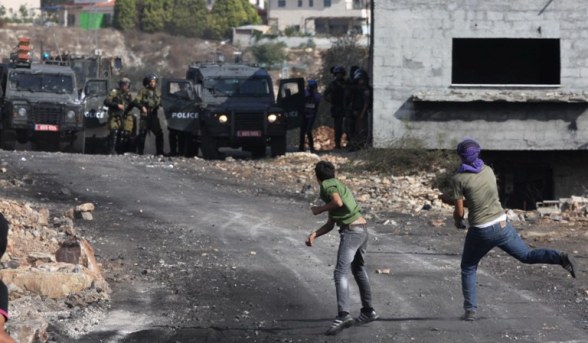
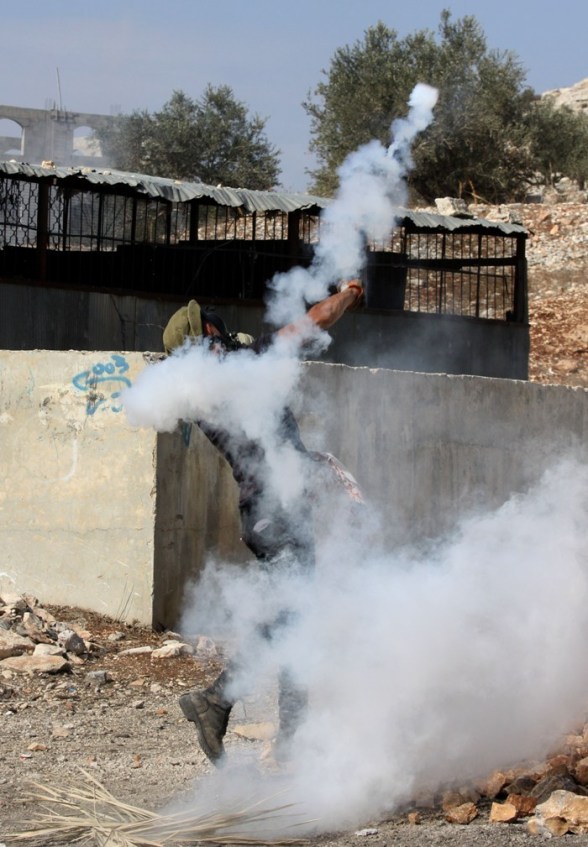
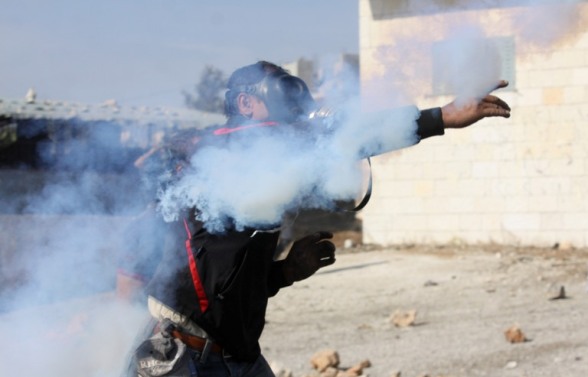
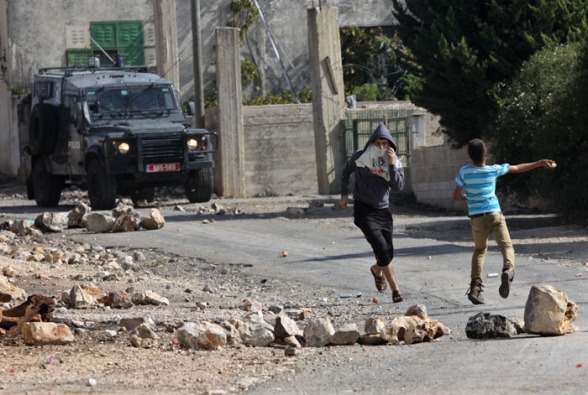
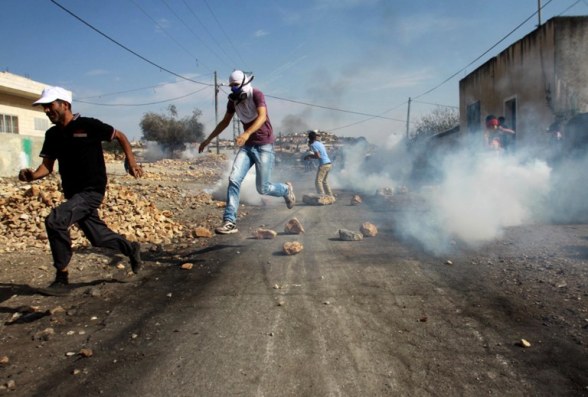
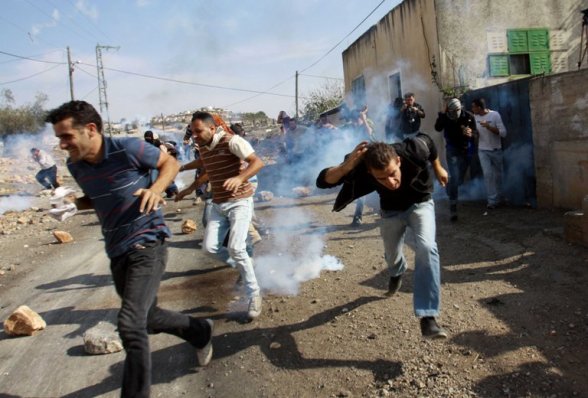
PHOTOS | Israeli forces open fire on West Bank protests, injuring dozens

(Photo MaanImages)
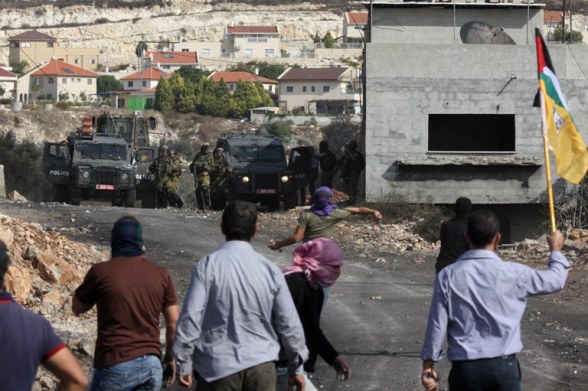
RAMALLAH (Ma’an) — Israel forces injured dozens of Palestinians and international activists after opening fire on demonstrations in four cities across the West Bank on Friday afternoon.
Israeli forces dispersed protests in Nabi Saleh, al-Masara, Bilin, and Kafr Qaddum protesting the killing of two Palestinians by Israeli forces on Thursday and marking the 9th anniversary of the death of former President Yasser Arafat.
Israeli forces fired tear gas, rubber-coated steel bullets, and stun grenades at the various protests in order to disperse them, causing dozens of injuries.
In Nabi Saleh, Israeli forces dispersed demonstrators who marched throughout the village raising Palestinian flags and pictures of late President Yasser Arafat.
Demonstrators chanted songs calling for the opening of all roads, dismantling of checkpoints, and condemnation of the killing of two Palestinians on Thursday.
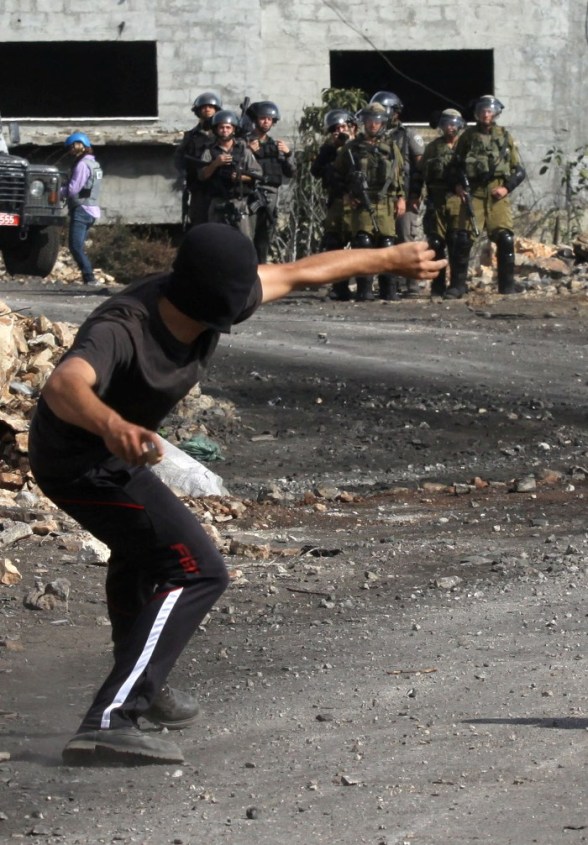
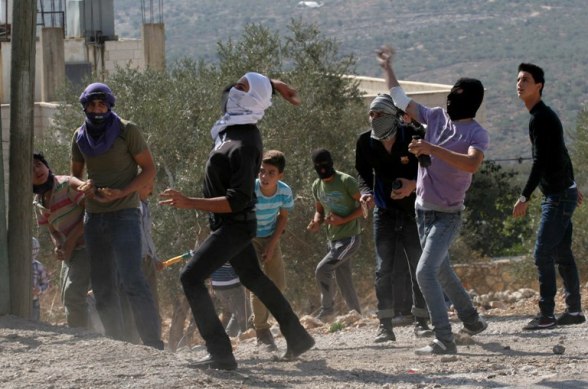
Clashes then broke out as Palestinians threw rocks at Israeli soldiers near the village, who in turn fired tear gas.
The Israeli army had declared the village a closed military zone in the early hours of the morning and restricted movement in an attempt to quash the weekly demonstration.
The people of Nabi Saleh have been protesting weekly for four years, demanding that their lands confiscated by Israeli forces to build the separation wall be returned.
In al-Masara, a village south of Bethlehem, a French activist was detained and dozens suffered from excessive tear gas inhalation as Israeli forces dispersed the weekly protest on Friday.
Protesters, including a German solidarity group, marched from the center of the village toward the Israeli separation wall and raised Palestinian and German flags.
Popular Struggle Committee Coordinator in Bethlehem Hassan Brejia said that Israel was trying to “drag Palestinians into violence.”
Since 2006, the residents of al-Masara have protested on a weekly basis, demanding Israeli authorities return village lands confiscated in order to build the separation wall as it crosses through their town.
In Bilin, near Ramallah, dozens suffered from excessive tear gas inhalation as Israeli soldiers dispersed the weekly demonstration.
Israeli forces fired rubber-coated steel bullets, stun grenades, and tear gas at protesters as they marched near their confiscated lands near the wall.
Palestinian, Israeli, and international activists participated in the protest. They raised Palestinian flags, and a large poster of late President Yasser Arafat while chanting songs for unity and resistance against the Israeli occupation.
Since 2005, Bilin villagers have protested on a weekly basis against the Israeli separation wall that runs through their village on land confiscated from local farmers. Previous protests by Bilin activists have forced the Israeli authorities to re-route the wall, but large chunks of the village lands remain inaccessible to residents because of the route.
Clashes between Israeli forces and protesters also broke out on Friday in Kafr Qaddum.
Israeli forces raided the village during the clashes, firing tear gas andstun grenades, and causing dozens to suffer from excessive tear gas inhalation including seniors, children, and international activists.
Hundreds participated in the protest, chanting national songs and songs for late president Yasser Arafat.
Murad Eshtewi, spokesman of the local protest committee, said that Israel is diminishing Palestinian dreams of freedom and independence by continuing their settlement activity, which weakens the possibility of a two-state solution.
Protests are held every Friday in Kafr Qaddum against Israel’s closure of a main road linking the village to its nearest city, Nablus.
In 2004, the International Court of Justice called on Israel to stop construction of the separation wall within the occupied West Bank.
When completed, 85 percent of the wall will run inside the West Bank.
Palestinian officials demanded a global probe into the “killing” of Yasser Arafat on Thursday, a day after it emerged that Swiss forensic tests showed he probably died from polonium poisoning.
The internationally recognized Palestinian territories of which the West Bank and East Jerusalem form a part have been occupied by the Israeli military since 1967.
Qalqiliya – confrontations between youths and Israeli soldiers, during the weekly anti-settlement protests Photos by Ayman Nubana (WAFA):
15_42_15_8_11_2013115_42_15_8_11_2013215_42_15_8_11_2013315_42_15_8_11_2013444_39_15_8_11_2013144_39_15_8_11_2013244_39_15_8_11_2013344_39_15_8_11_2013444_39_15_8_11_20135


Wednesday, November 6, 2013

Milwaukee Palestine solidarity activists confront marketers of illegal settlement product SodaStream


Milwaukeeboycott
(Photo:Milwaukee protest against SodaStream (Fight Back!News/Staff) Milwaukee protest against SodaStream)
Milwaukee, WI – On Nov. 5, the self-proclaimed “fastest growing motivational movement,” #besomebody, met the world’s fastest growing boycott movement on the campus of the University of Wisconsin-Milwaukee.
Over 20 activists handed out informational fliers exposing the connection between SodaStream and the #besomebody “movement” which markets SodaStream’s in-home soda machines. Activists educated fellow students on SodaStream’s human rights abuses which include operating on an illegal Israeli settlement in the West Bank of Palestine.
Members of two Students for Justice in Palestine chapters held signs that read, “Don’t drink SodaStream. Support Palestinian human rights. #besomebody against occupation.”During the action, activists from the Milwaukee Palestine Solidarity Coalition and Friends of Palestine met with #besomebody’s founder, Kash Shaikh, and urged him to cut ties with companies that profit from the occupation of Palestine. Before a large group of activists Shaikh admitted, “I didn’t do a very good job looking into their background,” referring to SodaStream, and said he was personally opposed to the occupation.
Actions and local campaigns against companies that sell SodaStream have been springing up over the last year as it becomes one of the primary focuses of the Boycott, Divestment, and Sanctions (BDS) movement. A national week of action against SodaStream will coincide with ‘Black Friday’ later this month, focused on the retailer Target, demanding they withdraw the product and break ties with the Israeli occupation.


Still living in fairy-tale-land about Israel?

Time to wake up: The Map of the “Greater Israel” even is hammered on the currency:
All facts at Storify continuously updated. Read what Israeli ‘leaders’ have said and done even before (peace) talks and how their actions contradict the reality and ugly facts which they try to hide from you:
You can forget all details.
Save yourself time.
It is only about Ethnic Cleansing
 of Palestine
The No-State Solution for Palestine
The facts. Mainly Israeli sources. Continuously updated

Tuesday, August 6, 2013

Illegal Israeli settlements expanding rapidly

The population in illegal West Bank settlements has grown twice as much as in Israel itself, military radio said, quoting official statistics.

The figures show an increase of 7,700 illegal settlers in the occupied West Bank during the first six month of 2013 for a total settler population of 367,000, according to the radio on Tuesday.
This represents a 2.1 percent increase in six months compared to an annual population growth of two percent registered in Israel.
The figures released by the interior ministry are likely to add to Palestinian misgivings about resuming talks in Washington last week with the Israelis.
The talks broke down three years ago over the settlement issue.
The number of illegal settlers in West Bank outposts that could be dismantled as part of an eventual agreement between Israel and the Palestinians rose by 1.7 percent in the first half of the year, the report added.
Subsidising illegal settlements
The Israeli government on Sunday added 20 more illegal settlements to a list drawn up in 2009 of Jewish communities prioritised for aid.
Some of the illegal settlements on the list are strongholds of Jewish Home, a nationalist party in the government coalition of Prime Minister Benjamin Netanyahu, who has rejected Palestinian calls for a freeze on settlement construction as a condition to resume peace talks.
Settlement building in the West Bank and mostly Arab East Jerusalem, which Israel seized in the 1967 Six-Day War, are considered illegal under international law.
Israeli and Palestinian negotiators agreed at an initial meeting in Washington last week hosted by US Secretary of State John Kerry to aim for a peace deal within nine months.
But analysts say the issue of illegal settlements, which triggered the breakdown of the last round of talks in September 2010, would prove even more of a sticking point this time with hardline pro-settler ministers inside the Israeli government.
Yesha, the main settler organisation, has urged the government to launch new tenders for the construction of homes in the illegal settlements to meet what is says is a "growing demand."
Israeli anti-settlement group Peace Now has accused the government of encouraging people to move into illegal settlements.
"The government is offering land free of charge [to settlers]... and under such conditions it is no surprise that Israelis are moving into settlements," said Peace Now head Yariv Oppenheimer.
Meanwhile, Jewish Home leader and Economy Minister Naftali Bennet was quoted as saying in media reports that the government was preparing to issue tenders for the construction of new settler homes in  East Jerusalem.

Monday, June 3, 2013

Abbas names new Palestinian prime minister

Palestinian President Mahmoud Abbas has called on Rami Hamdallah, the head of al-Najah University in the West Bank city of Nablus, to form a new government as the next prime minister, and the academic said he accepted the task.
Abbas handed the task to Hamdallah, also the head of the electoral commission, during a meeting at the Palestinian Authority headquarters in Ramallah on Sunday.
"President Abbas has asked me to form a new government and I have accepted," Hamdallah, 54, a member of Abbas's Fatah party who has also headed the Palestinian Stock Exchange, told the AFP news agency.
"The government will be formed in the coming days. Most ministers of the outgoing government will stay and I will bring in a new finance minister," he added.
Hamdallah has a doctorate in applied linguistics from Britain's Lancaster University and was born in Anabta, near Tulkarem in the northern West Bank. He has no previous experience in a political role.
The move came as the term of Palestinian caretaker Prime Minister Salam Fayyad formally ended.
Fayyad, a political independent, resigned on April 13 after months of tension with Abbas, despite US efforts to keep him in place.
He stayed on in a caretaker role, the period for which legally ends on Sunday night.
On April 27, Abbas announced that consultations had started to form a unity government under his own leadership, in accordance with a long-delayed reconciliation deal between his Fatah faction and the rival movement Hamas.
Palestinian Basic Law stipulates that the person charged with forming a new government then has three weeks to choose a new lineup, which can then be extended by another two if the issue is not resolved within that timeframe.

Monday, November 19, 2012

Israeli army suppresses protests in W. Bank and E. Jerusalem, killing Palestinian man


972mag.com

For the second day in a row, Israeli soldiers fired tire gas at the unarmed students of Al Quds University in Abu Dis in the West Bank in an attempt to suppress protests against the assault on Gaza. Israeli forces have violently put down demonstrations across East Jerusalem and the West Bank in the past several days. Rushdi Tamimi, 31, was shot by Israeli soldiers during a protest in Nabi Saleh on Saturday; he died today in a Ramallah hospital.
A 19-year-old student told 972 that, as she was leaving campus yesterday around 4:00 PM, she saw little kids throwing stones at Israeli soldiers. One of the college students also threw a rock in the soldiers’ direction, she said, as a form of protesting the Israeli assault on Gaza that has killed over 100 Palestinians. The soldiers shot tear gas at the children and the student and then ran towards a crowd of university students, pushing them into campus, where they continued to fire tear gas at them.
Five Al Quds University students were arrested.
The student reported that she and dozens of other students hid in a building as they did not want to confront the soldiers. One of her friends fainted from tear gas inhalation.
A professor told +972 that as he fled campus yesterday afternoon, he saw one student, “lying down and twitching.” Another student was bleeding from his head.
Clashes between Israeli soldiers and unarmed Palestinian students took place this afternoon outside of Al Quds Univeristy. Soldiers shot tear gas onto the campus.
Abu Dis is located in the West Bank Area B, which is under the administration of the Palestinian Authority with Israel maintaining control over security.
According to Maan News Agency, more than 50 protesters were injured today during demonstrations, held in East Jerusalem and the West Bank, against Israel’s “Operation Pillar of Defense.” Israeli soldiers suppressed the protests with sound bombs, tear gas, and rubber-coated bullets. At least a dozen demonstrators were arrested today.
Abir Kopty of the Popular Struggle Coordination Committee reported that protests held on Saturday and Sunday at Nabi Saleh, Ofer Military Prison, Hebron, Nablus, Jenin, and Bethlehem were put down tear gas, rubber bullets, and rubber-coated bullets, with soldiers sometimes firing directly at demonstrators. More than 10 protesters were arrested and a number were injured, including Tamimi, who was shot in the back with live ammunition. According to Kopty, “While injured, soldiers dragged him attempting to detain him.”
Tamimi was taken to a hospital in Ramallah where he died of his injuries today.

Rushdi Mahmoud Hassan al-Tamimi dies of wounds in Nabi Saleh protest against #GazaUnderAttack


RAMALLAH (Ma’an) — A 28-year-old Palestinian man died on Monday after he was wounded in clashes with Israeli forces at a protest in the West Bank.
Rushdi Mahmoud Hassan al-Tamimi was hit by live fire in the stomach and thigh during a Gaza solidarity demonstration in Nabi Saleh, near Ramallah, on Saturday, the village’s popular committee said.
Al-Tamimi was taken to the Palestine medical complex in Ramallah with internal bleeding. A doctor in the hospital confirmed he had died on Monday evening.
The committee said al-Tamimi was left on the ground after he was shot at close range, and Israeli forces threatened citizens who tried to administer first aid.
Al-Tamimi was a Palestinian police officer. His funeral will be held in Nabi Saleh on Tuesday.
After news of his death, a large crowd of Palestinians took to the streets in Ramallah to protest before heading to the hospital to offer condolences.


Thursday, October 25, 2012

25 October 2012 | International Solidarity Movement, West Bank


DONATE HERE: http://palsolidarity.org/donate/
Israeli authorities are threatening to deport two international acvists, arrested yesterday at a non-violent action at a settlement supermarket, despite a judge ruling that they should be released. They are currently being held in immigration detention.
Earlier today, defence lawyers were informed that a judge had ruled that they should be freed without charge, but this ruling was ignored by Israeli police, who handed the two activists to the Ministry of Interior, to begin the deportation process. They could be flown back to their home countries within hours, despite never having been charged, let alone convicted of any crime. They have also been repeatedly denied contact with their lawyer.
Substantial legal costs have already been incurred. If they choose to fight this unjust deportation, then these will be even higher. We urgently need funds to challenge the Israeli tactic of deporting solidarity activists to prevent our work in the West Bank.
Freedom for international activists can also be key in legal processes for Palestinians who are arrested at the same time. Previously this month, four ISM activists and two Palestinian men were arrested. One of the Palestinian men was released just yesterday, following a judge’s decision that to keep him in prison after the international activists had been freed would be unjust and discriminatory.
Please donate now so that we can continue our work supporting the Palestinian cause.
DONATE HERE: http://palsolidarity.org/donate/
In Solidarity, International Solidarity Movement

--
PLEASE FORWARD THIS UPDATE WIDELY
 
You received this message because you are subscribed to the Google Group "International Solidarity Movement" group. To post to this group, send email to palsolidarity@googlegroups.com. To unsubscribe from this group, send email to palsolidarity+unsubscribe@googlegroups.com
 
For more options, visit this group at http://groups.google.com/group/palsolidarity?hl=en
 
DONATE @ http://palsolidarity.org/donate
WEBSITE: http://palsolidarity.org
YOUTUBE: http://youtube.com/user/ISMPalestine
TWITTER: http://twitter.com/ismpalestine
FACEBOOK: http://www.facebook.com/pages/International-Solidarity-Movement/56674479144 

Monday, June 11, 2012

Can Israel survive its 45-year occupation?


Nadia Hijab is Director of Al-Shabaka: The Palestinian Policy Network. She serves on the advisory board of the US Campaign to End the Israeli Occupation.


This week marks the 45th anniversary of Israel's occupation of the West Bank, Gaza, and East Jerusalem. A decade ago, I joined a small group of Americans in identifying the occupation as the Achilles heel in Israel's decades-old violations of Palestinian human rights. We believed that hard work and our diverse ethnicities, faiths, and ideologies, grounded in a common commitment to international law, would soon get the "end occupation, uphold human rights" message out to the political establishment and fellow Americans. After all, there was international consensus concerning the "inadmissibility of the acquisition of territory by war," a basic principle of international law enshrined in U.N. Security Council Resolution 242 of 1967, which called for Israel's withdrawal from the territories it seized in the 6-day war it launched on June 5.  


Even though the organization we co-founded has since grown to represent hundreds of thousands of Americans, the Israeli occupation appears more entrenched than ever. Israel has cemented its control of Palestinian land and water, settling over 500,000 of its people in the territories and herding the Palestinians into ever-smaller enclaves, all the while flagrantly violating international law. Yet it has continued to enjoy the support of the United States, including diplomatic cover at the U.N. and massive military aid.  


Israel has also benefited from the acquiescence of the Palestinian Authority and Palestine Liberation Organization in the moribund "peace process" launched by the Oslo Accords nearly 20 years ago. Although this so-called leadership now refuses to participate in negotiations so long as Israel continues to colonize, they have not definitively pulled out of them, even though the only tangible result has been the inexorable loss of Palestinian land and rights. 


Worse, they have no clear counter-strategy and have not been willing to invest in the sources of power necessary to achieve Palestinian human rights, even though there are many avenues available -- diplomatic, economic, mobilization of Arab and international civil society -- that could effectively challenge Israel.


http://blog.endtheoccupation.org

Monday, February 27, 2012

Female detainee on hunger strike moved to isolation


27/02/2012 14:27
Font- Font+
(MaanImages/file)
RAMALLAH (Ma’an) -- Female detainee Hana Shalabi has been moved to solitary confinement as a punishment for her hunger strike action, a lawyer from the Ministry of Detainees said Monday.

Shireen Iraqi said that Hasharon prison authorities have moved Shalabi into isolation. Her health is deterioting, Iraqi said, adding that Shalabi has not been medically examined since she went on strike.

Hana Shalabi, from the northern West Bank village Burqin, is being held without charge since her detention on Feb. 16. She announced her hunger strike immediately after soldiers seized her from the family's Jenin-district home.

Shalabi said through her lawyer that she is not afraid of death and will continue to refuse administrative detention.

Shalabi was freed in October 2011 when Hamas secured the release of more than 1,000 Palestinians in Israeli jails in exchange for a captured Israeli soldier.

She had spent 25 months in administrative detention, under procedures that allow Israel to detain Palestinians for renewable terms of six months without pressing charges, using laws dating back to the British Mandate period.

Four months later, Shalabi found herself back in jail using the same detention orders. Three other detainees released under the same deal were re-arrested by Israeli forces last week.

Israel is holding 309 Palestinians in administrative detention, according to figures by prisoners rights group Addameer. There are currently six Palestinian woman in Israeli custody.

Thursday, May 19, 2011

IOF kidnap six Palestinians today in W. Bank


[ 19/05/2011 - 03:03 PM ]


RAMALLAH, (PIC)-- The Israeli occupation forces (IOF) have kidnapped at dawn Thursday six Palestinian citizens in different West Bank areas.
Local sources said the IOF violently knocked at the doors of homes causing panic among children and women during the raids.
The detainees were taken blindfolded and handcuffed to interrogation centers.
In another development, the Palestinian prisoners in Nafha jail called in a letter addressed to all Palestinian spectra especially the resistance factions to support their protest steps which they take every once in a while to demand an end to the violations committed against them by Israeli jailers.
The prisoners said they demand the prison administration to end its solitary confinement policy, improve incarceration conditions and stop the punitive measures taken against them lately because of their protest steps.

Thursday, December 9, 2010

West Bank and Gaza Solid Waste Management Project

Overview

Drawing on World Bank Group Trust Fund financing and expertise since 2001, the Palestinians were able to improve solid waste management and environmental conditions in 80 communities in Jenin Governorate, with a population of 200,000 people. They achieved this by establishing a new sanitary landfill, closing and rehabilitating 85 dumpsites, and improving waste collection services. Towards the end of the project, the new landfill was expanded to serve all five governorates that comprise the northern West Bank (population 600,000), providing for further cost saving and enhancing public-private partnerships.

read full article here...

Sunday, December 5, 2010

British Labour MP calls for Israeli settler labelling on food imports


Yvette Cooper wants EU to follow example of supermarkets which identify goods produced in occupied West Bank

Nicholas Watt, chief political correspondent
The Guardian, Saturday 4 December 2010

Britain should step up pressure on Israel to stop building illegal settlements in the West Bank by pressing for greater Europe-wide transparency on food exported from the occupied territories, Yvette Cooper says today.

In an interview with the Guardian, she calls on the government to persuade the EU to introduce labelling that would identify goods produced by Israeli settlers.

Cooper, who spoke after her first visit to the Middle East as shadow foreign secretary, wants the EU to follow the example of supermarkets which identify goods produced in the occupied West Bank.

Wednesday, February 24, 2010

Hebron's living hell

Alice Rothchild writing from Hebron, occupied West Bank, Live from Palestine, 23 February 2010


Israeli soldiers detain Palestinian youths in the old city of Hebron.

On 12 January, we drove to the southern West Bank city of Hebron. This city is drowning in a complex, traumatic and violent history that has given birth to the outrageous situation we see today. Hebron is known from biblical stories as the burial place of Abraham, Isaac, Jacob and their wives several thousand years ago. This was famously followed by multiple invasions, the Arab massacre of Jews in 1929 one week after Zionists raised a Jewish flag at Jerusalem's Wailing Wall (with many questions regarding the role of the British in this catastrophe), and Baruch Goldstein's massacre of Muslims praying at the Ibrahimi Mosque in the middle of Ramadan in 1994.

We toured Hebron with Hisham Sharabati, the uncle of our local co-leader, Lubna. He explained that he went "to the college of the Israeli prison during the first intifada," and that after a barrage of tear gas and rubber bullets, he was shot in the leg and sustained a fracture, requiring crutches for one and a half years. He is articulate and educated; suffering has made him strong.

We started in a central open area of the market, old stone buildings with green metal doors on the ground floor, a small square with palm trees, women in colorful headscarves sitting on poured concrete seats under umbrellas, and a steady circle of traffic and rambunctious young boys, racing around playing, and harassing us, with unrelenting requests to purchase a variety of Palestinian trinkets. On quick inspection, I noticed multiple security cameras and a few guard towers mounted on the tops of the buildings as well as an Israeli army checkpoint with a swinging yellow metal gate and a solid metal gate guarding the entrance to a Jewish settler area with a soldier perched above. All the ground floor doors, formerly markets, were closed, some welded shut by the Israeli army, and there was a second floor Palestinian apartment completely encased in wire to protect the windows as well as the inhabitants from rocks thrown by Jewish settlers.

As we sat down for the usual lunch of falafel, hummus, pita and a collection of vegetables, Hisham began to speak, his style sincere and serious with an ironic sense of humor. Shortly, we noticed a commotion at the checkpoint site and it appeared that a number of the teenage boys had been apprehended by the soldiers with their intimidating automatic weapons ready, and were being taken one by one inside the metal door for questioning after their bags were checked. We moved closer and could only peek through a crack in the tall concrete blocks around the checkpoint. The local population did not seem to pay much attention to this encounter, clearly an everyday affair. I do not know what happened to the boys, although several were released and came out, tucking in their shirts and resuming a slightly subdued teenage swagger. The little boys watched with curiosity and at one point, two Israeli soldiers came out from their bunker, wearing what appeared to be a significant amount of battle gear, hands always on their weapons, and spoke with the little boys. I suspected this is the only kind of interaction these children have with Israeli Jews.


An Israeli army watchtower atop a home in the old city of Hebron.

Hisham explained that after 1967 a group of very right-wing Jewish settlers came to a hotel in Hebron and declared they would never leave. A deal was struck with the Israeli army that they could settle next to a military facility. There were further deals and expansions and ultimately the settlement of Kiryat Arba was officially established in 1971. These settlers have a history of particularly violent, racist, ugly attacks against their Palestinian neighbors, often observed and sometimes even promoted by the Israeli soldiers. These are the settlers that spray paint "Death to the Arabs!" or "Gas all Arabs" on the walls of Palestinian homes and taunt children and women, calling the women whores. Much of this has been well-documented by Palestinians with video cameras, many provided by the Israeli human rights organization B'Tselem as part of their "Shoot Back" campaign. It is soldiers from Hebron who started "Breaking the Silence," when they felt guilty and haunted by their violent racist behavior patrolling this city. The local Palestinians have responded with repeated nonviolent resistance, including strikes and demonstrations, and according to Hisham some of the local leadership have been arrested by Israeli authorities and forcibly transferred and deported. In the 1970s and 1980s there were also armed attacks against the settlers as well as an attack on a nearby settlement called Beit Hadassah.

In the 1990s, a group of 400 settlers (which included 250 yeshiva students) decided to move into the Old City, into homes that they claimed were originally Jewish and these settlers have repeatedly attacked the local Palestinians and destroyed their market and ability to live a normal life. There are 150,000 Palestinians in all of Hebron and 35,000 in H2, the area of the city under strict Israeli control, "taken hostage on behalf of the settlers." The UN Office for the Coordination of Humanitarian Affairs has documented 98 different kinds of restrictions of movement in an area that is just one square kilometer. Five hundred and twelve Palestinian stores, spray painted with red and black dots, have been closed by military order and there have been repeated prolonged closures and curfews. Palestinians are only allowed to walk on certain streets, and some can only access their homes by traipsing through other backyards or by walking from roof to roof, up and down ladders. The central bus station was taken for "security" and given to settlers and the yeshiva was built above the Palestinian market on top of a Palestinian school.

We wandered through much of the market, some of it ghostly quiet, some bustling with vegetables, fruit, clothes and crowds of people. Above the market Hisham pointed out metal wiring creating a protective barrier as settlers living above throw garbage, bricks, stones, plastic bags of urine and feces and other offensive items down upon the Palestinians. At one point he gestured to a plastic covering with a ragged hole above the market area. Here the Jewish settlers threw acid which burned the plastic and caused havoc below. Suddenly we saw see three Palestinian young men spread eagle against the wall, one kicked by a solder, and several soldiers patting them down. We moved closer, hoping our presence might contain the violence, and after what felt like an endless harassment, the young men were set free. Welcome to the daily Hebron patrol and as one delegate said, the mass psychology of fascism.


Hashem Aza standing in front of his home with its caged windows to protect from settler violence.

The most painful part of this tour was the visit to Hisham's friend, Hashem Aza, who not only cannot access his house from the main street, but also lives next to one of the most rabid anti-Palestinian settlers. He has been told, "If you want peace, go to Gaza, Egypt, Saudi Arabia," been cursed viciously, and particularly after the severe curfews from 2000 and 2003, many of his neighbors gave up and left. He stated that there is a 90 percent poverty rate and minimal available employment. We clambered up a rocky hill, through several back yards and back stairs until we reached his home. He pointed to the stone stairs and garden that once were his backyard, but this has been repeatedly destroyed by his Jewish neighbors who not only have attacked his home and his family, but they have also cut his fruit trees, water and electricity lines. They too throw garbage and once hurled a washing machine that we see rusting amongst the trees. Only recently has he acquired water again and we see a new bright blue pipe snaking through the various backyards. His little boy came scampering outside chasing a pink ball, watched carefully by his wife. In his home he shared more horrifying personal stories, showing us a series of videos documenting racist, violent attacks against Palestinians, primarily women and children, often by settler women and children, with no response from the nearby Israeli police or army. A committed nonviolent activist, he and his wife and nephew have been personally attacked, their home repeatedly trashed, his children suffer from bed-wetting and other signs of post-traumatic stress disorder, and he has unsuccessfully pursued his case in Israeli courts. He is determined to persevere, to document the realities in his beloved city, and bring this to the attention of the international community. We listened, stunned and drowning in shame, outrage and heartbreak.

Our sobering taste of life in Hebron included other devastating stories and the presence of Israeli guard towers, camouflage netting, checkpoints, a wall spray-painted with graffiti that included a tribute to the Golani brigade, one of the Israeli army's most aggressively violent units, and to Betar, a right-wing youth organization. I passed a concrete block obstructing the road, spray-painted with an arrow and the words "This is apartheid." There were occasional Palestinian Authority police, but the consensus was that they are mostly useless.

So what do we do with this shameful reality? While most Israelis do not support these settlers, they receive full support, protection and encouragement from the Israeli government and military, and this has not changed in the past 42 years, no matter who is in power. They have made the lives of the Palestinians in Hebron a living hell, and they have never been held accountable. This does not happen by accident. From the moment Goldstein massacred the Palestinians in the mosque, it was a political decision by the Israeli government to put the Palestinians under curfew and protect the Jewish settlers who now celebrate his murderous actions. While these settlers are clearly the most racist, religiously fanatic, possibly deranged, and fascistic element in Israeli society, they both use and are used by the government as a wedge in the never ending land grab and Judaization of the West Bank.

Given the blather that mostly passes for news about the settler issue in the US, and Israeli leaders Benjamin Netanyahu and Avigdor Leiberman's blatant support for the settlement project and utter disregard for the welfare of Palestinians, the movement for boycott, divestment and sanctions against Israel is looking more and more like a reasonable imperative. I take my inspiration from the nonviolent activists who shared their painful reality with us. Such is the impact of a day in Hebron.

All images by Alice Rothchild.

Alice Rothchild is a Boston-based physician, activist and writer. A second edition of her book, Broken Promises, Broken Dreams: Stories of Jewish and Palestinian Trauma and Resilience (Pluto Press, 2007) will be released in February 2010.

Tuesday, February 23, 2010

"At least there's food in prison!"

Joy Ellison writing from al-Tuwani, occupied West Bank, Live from Palestine, 17 February 2010


Palestinians in the south Hebron hills are subject to harassment by both Israeli soldiers and settlers. (ActiveStills)

"This morning," my neighbor Mona explained to me, "I told my husband that since the kids are out of school and he didn't need to go into town, I would cook something special and we would have a party." Mona has a wry sense of humor and I started to wonder what the punch line would be. "We were going to invite you, but instead we had a little party with the soldiers and the settlers." Mona cocked her head to one side and shrugged, smiling ironically. Mona lives in the Palestinian village of al-Tuwani located in the occupied West Bank's south Hebron hills.

The "party" we had in al-Tuwani wasn't nearly as fun as the party that Mona had planned. At about 9am on 26 January, a settler from the Havot Maon settlement outpost entered the village, accompanied by the Israeli army and the Maon settlement security guard. The settler then entered the homes of my neighbors and searched in their animal pens. "What is he looking for?" my neighbors asked the soldiers. "If he thinks we've stolen something, bring the police and conduct a normal search. Where's the rule of law?"

Between 15 and 20 settlers accompanied by more soldiers arrived. Mona's husband tried to convince the soldiers to make the settlers leave the village. "We'll go back into our houses if they leave," he said. But then the settlers started throwing stones at a group of Palestinian women and children. The next thing I knew, the soldiers were pointing their guns at my neighbors. One of them drew back his fist and punched someone in the face. It was Mfadi, the quietest, least imposing man in the village. His nose was bleeding. Another soldier raised his gun and fired. For a moment I was stunned and dumbly wondered why no one seemed to be shot. Then I realized that he had fired a sound bomb and the soldiers were likely to start using tear gas next. I saw the same soldier pull out another canister. "Don't do it," I started screaming. "There are women and children here. Don't shoot that!"

Later, when the soldiers and settlers had left the village, Mona told me that Mfadi's nose was broken and he would need an operation. She also said that the soldiers told her and the women that if they did not leave the area, they would arrest all of the men of the village and kill at least one. "We didn't leave," said Mona. "One of the girls told them they could take her whole family to jail if they wanted to. She said that there was no food in her house. At least there's food in prison!" Mona laughed.

Then Mona told me about the party she had wanted to have, until the settlers and soldiers prevented it. I started to wonder how many other parties were canceled because of the Israeli occupation that day. But then Mona smiled. "Maybe we'll have our party tomorrow," she said. Sure enough, the next afternoon I sat on Mona's front porch laughing and sipping tea. As we ate the food that Mona had promised, I imagined the celebration she will throw when the occupation is finally over. Soldiers and settlers won't be able to cancel that party -- they can only postpone it.

The names of individuals in this story have been changed for their protection.

Joy Ellison is an American activist with Christian Peacemaker Teams, an organization that supports Palestinian nonviolent resistance. She lives in al-Tuwani, which is nonviolently resisting settlement expansion and violence. She writes about her experiences on her blog, "I Saw it in Palestine" at http://inpalestine.blogspot.com.

Thursday, January 28, 2010

American Surgery Mission Treats Kids in Hebron

On January 22nd, a 3-member team from the USA arrived in the West Bank town of Hebron to start a week of screening and treating children with urological disorders.

The team included pediatric urological surgeon Dr. John Gazak from Presbyterian Hospital in Charlotte, North Carolina, Dr. Kevin Healy, an anesthesiologist from Ames, Iowa, and scrub nurse Teresa Bubb from Portland, Oregon. The same team worked last Spring in Palestine through the PCRF as part of a project in coordination with International Volunteers in Urology (IVU).

In addition to screening over 140 children on the first day, the team has a full week of complex surgery on children from all over the West Bank.
Dr. Gazak also has treated two Palestinian children for free at his hospital in North Carolina through the PCRF and another child from Gaza will be traveling there for surgery next month.

Sunday, January 17, 2010

The United States, Israel and the retreat of freedom

Ali Abunimah, The Electronic Intifada, 14 January 2010


Epitomizing freedom: an Israeli soldier aims a gas grenade launcher at a Palestinian demonstrator in the occupied West Bank. (Oren Ziv/ActiveStills)

The world is suffering from a "freedom recession" according to a new report from the American think tank Freedom House ("Freedom in the World 2010," 12 January 2010).

Established in 1941, Freedom House markets itself as "an independent watchdog organization that supports democratic change, monitors the status of freedom around the world, and advocates for democracy and human rights." Its board of directors, chaired by a former US deputy secretary of defense, is a who's who of Democratic and Republican former US government officials, prominent neoconservatives and Israel lobby stalwarts such as Tom Dine, former executive director of AIPAC. In 2007, more than two-thirds of its $16 million budget came directly from the United States government.

Not surprisingly then, Freedom House's report reveals more about the groupthink of the US establishment -- especially with respect to its continued efforts to dominate the Middle East and ensure Israel's supremacy -- than it does about the countries surveyed.

Focusing on two categories of "freedom" -- "civil liberties" and "political rights" -- the report divides the world's 194 countries into three groups: "free" (89), "partly free" (58), and "not free" (47).

Interestingly, Freedom House records "declines in freedom" in "countries that had registered positive trends in previous years, including Bahrain, Jordan, Kenya and Kyrgyzstan." Jordan was one of only six countries to move from the "partly free" category to "not free." What does it say about US "democracy promotion" that Jordan, Bahrain and Kyrgyzstan -- major political and military operating bases for the "war on terror" and US-led occupations in Iraq and Afghanistan -- have become less free as their dependence on the US has increased?

Sadly, while the report frets that "the most powerful authoritarian regimes [such as Russia and China] have become more repressive, more influential in the international arena, and more uncompromising," it has nothing at all to say about the US role in restricting freedom and spreading mayhem around the world. Sometimes this is truly absurd as the report points to "continued terrorist and insurgent violence in Pakistan, Afghanistan, Iraq, Somalia and Yemen," but fails to note that two of these countries are under direct US military occupation (Afghanistan and Iraq) while the US is intervening militarily in the other three. (The report presents a mixed picture for the US-occupied countries; both are "Not Free" but Iraq allegedly became more free during 2009 and Afghanistan less free.)

Rather than offer any introspection on the inverse relationship between US efforts at global domination on the one hand, and the spread of freedom on the other, the report's overview essay concludes with a call for more vigorous intervention: "The United States and other democracies should take the initiative to meet the authoritarian challenge ..."

Freedom House's approach to Israel provides the starkest example of the abyss into which liberal thinking has fallen on the relationship between colonialism and freedom. Israel, we are told, "remains the only country in the [Middle East] region to hold a Freedom in the World designation of Free." We are informed euphemistically that "The beginning of the year [2009] was marred by fierce fighting between the Israeli military and the Hamas movement in the Gaza Strip."

There is no mention of the deliberate targeting by Israel of Gaza's civilian infrastructure and the resulting massive destruction, and death and injury to thousands of Palestinian civilians. Nothing is said of the denial of fundamental political, civil and human rights, or freedom of movement, association and education to four million Palestinians living under Israeli military occupation and siege in the West Bank and Gaza Strip. There is no mention of the systematic discrimination, and social and political exclusion faced by 1.5 million Palestinian citizens of Israel, nor of the denial of the right of return of millions of Palestinian refugees.

There is an acknowledgment that "Hundreds of people were arrested during demonstrations against the Gaza conflict, and the parliamentary elections committee passed a measure banning two political parties from national elections, though the ban was quickly overturned by the Supreme Court."

Despite this, on the tables accompanying the report, "Israel" receives the highest score of "1" for political rights, and a very respectable "2" for civil liberties -- on a par with Italy and Japan. The overall impression is of minor glitches that could occur in any exemplary "Western" democracy.

Then on a separate table of "Disputed Territories" we find "Israeli-occupied territories" and "Palestinian Authority-administered territories" both listed. Both are given the designation "Not Free" and nearly the lowest scores for political rights and civil liberties. There is no narrative to explain who is responsible for this dire state of affairs. This convenient separation allows for all the ugly realities of what "free" Israel does in the occupied territories to be pushed out of sight and ignored.

But in what scheme can Israel be awarded freest of the free status when for two-thirds of its existence, since 1967, it has ruled directly over millions of disenfranchised Palestinians through violence and repression? The idea that the political regime in Israel's pre-1967 boundaries can be looked at as a "democracy" even while the situation in the occupied territories can be criticized as undemocratic is very widespread among Israelis and American liberals.

Former US President Jimmy Carter has been excoriated (and recently forced to apologize) by the Israel lobby for calling the situation in the West Bank and Gaza Strip "apartheid." Yet even he had simultaneously claimed that within its pre-1967 boundaries, "Israel is a wonderful democracy with equal treatment of all citizens whether Arab or Jew." True, Palestinian citizens of Israel can vote and are accorded civil rights far wider than their Palestinian counterparts in the West Bank and Gaza Strip. But even Israeli Jews commonly concede that Palestinian citizens suffer systematic and severe disadvantage and total exclusion from key political decisions about the country.

Israeli Jewish leftists (a rapidly dwindling group) and Western liberal sympathizers tend to view Israel within its 1967 boundaries as a flawed democracy -- perfectible with a reallocation of resources and less discrimination against non-Jews, even as they remain fully invested in maintaining Israel as a "Jewish state" with a Jewish demographic majority.

They view the 1967 occupation of the West Bank and Gaza Strip as the original sin that corrupted a purer Zionist vision, and thus remain fixated on the chimera of "ending the occupation" through a "two-state solution." Once this nirvana is reached, so they believe, Israel can resume its destiny as a liberal democratic state among others.

But it is not just the discrimination and limited rights of Palestinian citizens and other non-Jews that undermine the claim that Israel -- considered separately from the West Bank and Gaza Strip -- is a democracy. Nor is it even that Israeli settler-citizens in the West Bank have full voting rights for the Israeli parliament while Palestinians in the same territory have none. It is that "Israel" and the "occupied territories" are two sides of the same coin.

Israel's 1948 and subsequent ethnic cleansing of Palestinians, and ongoing repressive rule in the West Bank and Gaza Strip are not exceptional or temporary conditions. They are constitutive of the situation that allows Israeli Jews to currently claim they live in a (flawed) liberal democracy.

To be clear, the argument is not that conditions in Israel and the occupied territories are indistinguishable; rather it is that they form a single interdependent system. Israeli Jews can "freely" elect a Jewish government in Israel only because most Palestinians have already been ethnically cleansed. Thus the maintenance of this "liberal democratic" Jewish space depends directly on the permanent denial of fundamental rights to Palestinians.

Palestinian citizens of Israel -- who form 20 percent of the population within Israel's pre-1967 boundaries -- are, as noted, accorded limited liberal rights. This helps boost Israel's external image as a "wonderful democracy," but if the exercise of these rights ever threatens Jewish domination, they are curtailed. Examples include the constant legal harassment of Palestinian members of the Knesset, and various legislative projects for loyalty oaths or to ban commemoration of the Nakba, the 1948 ethnic cleansing of 750,000 Palestinians. Overwhelming Israeli Jewish opposition to calls by Palestinians in Israel for the country to be a "state of all its citizens" is an indication that Israeli Jews value their own supremacy over democracy.

Israel has sometimes been described as an "ethnocracy" -- a state where one ethnic group dominates and enjoys a wide range of liberal rights which are denied to others. But these liberal rights depend directly on the successful repression of the non-privileged ethnic group(s). As rebellions by the disenfranchised require ever greater levels of repression and violence to control, the repression must also be turned inwards.

In recent days, Israel extended for six months a ban on Sheikh Raed Salah, an Israeli citizen, and leader of the Northern Branch of the Islamic Movement in Israel, from traveling to Jerusalem, Israel's ostensible capital, where he had been exercising his civil rights to campaign against Israeli efforts to "Judaize" the city. (Separately Salah was also sentenced to nine months in prison for allegedly assaulting a police officer during a 2007 demonstration; a conviction condemned as political persecution by other Palestinian leaders inside Israel.)

Such repression does not only affect non-Jews. The United Nations-commissioned Goldstone report noted "that actions of the Israeli government" within Israel, during and after Israel's invasion of Gaza last winter, "including interrogation of political activists, repression of criticism and sources of potential criticism of Israeli military actions, in particular nongovernmental organizations, have contributed significantly to a political climate in which dissent with the government and its actions in the Occupied Territories is not tolerated."

These means of "internal" repression resemble the movement bans, censorship and other forms of harassment that the South African apartheid regime began to deploy in its late stages against dissenting whites, eroding the "liberal democratic" space they had for so long enjoyed at the expense of the country's black majority.

Maintaining a Jewish-controlled "liberal democratic" regime in Palestine/Israel is incompatible with the exercise of the inalienable rights of Palestinians. It emphatically depends on their permanent violation, especially the right of return. But the exercise of the inalienable rights of Palestinians -- an end to discrimination against Palestinian citizens, dismantling the 1967 occupation regime, and the right of return for refugees -- is fully compatible with Israeli Jews exercising the human, civil, political and cultural rights to which they are unquestionably entitled.

As a first step toward imagining and creating such a framework, we have to ditch the absurd idea reproduced by Freedom House, that Israeli Jews can epitomize perfect freedom while imposing perfect tyranny and dispossession on a greater number of human beings who belong to the same country.

Ali Abunimah is co-founder of The Electronic Intifada and author of One Country: A Bold Proposal to End the Israeli-Palestinian Impasse.